January 2026: When AI Broke Open Source
Why AI routing is collapsing business models, and three moves every designer needs now
Hello fellow designers, creatives, digital professionals, and Eidos Design members!
Mykola here with industry news as of January 2026. And what a way to start the year!
Something nobody predicted happened in January. The most successful CSS framework of the decade, reported to have more than ~75 million monthly downloads and the top spot in the 2025 State of CSS, suddenly faced a revenue shock that put its future in question. At the same time, Anthropic shipped a general-purpose agent aimed at people who do not write code, OpenAI launched a health-specific ChatGPT experience, Figma’s public valuation corrected hard from its July peak, and Jakob Nielsen published a prediction that AI task completion is accelerating faster than people expect.
January was one long reveal of who actually captures value when AI makes the hard things easy.

Eidos Design | UX AI Community
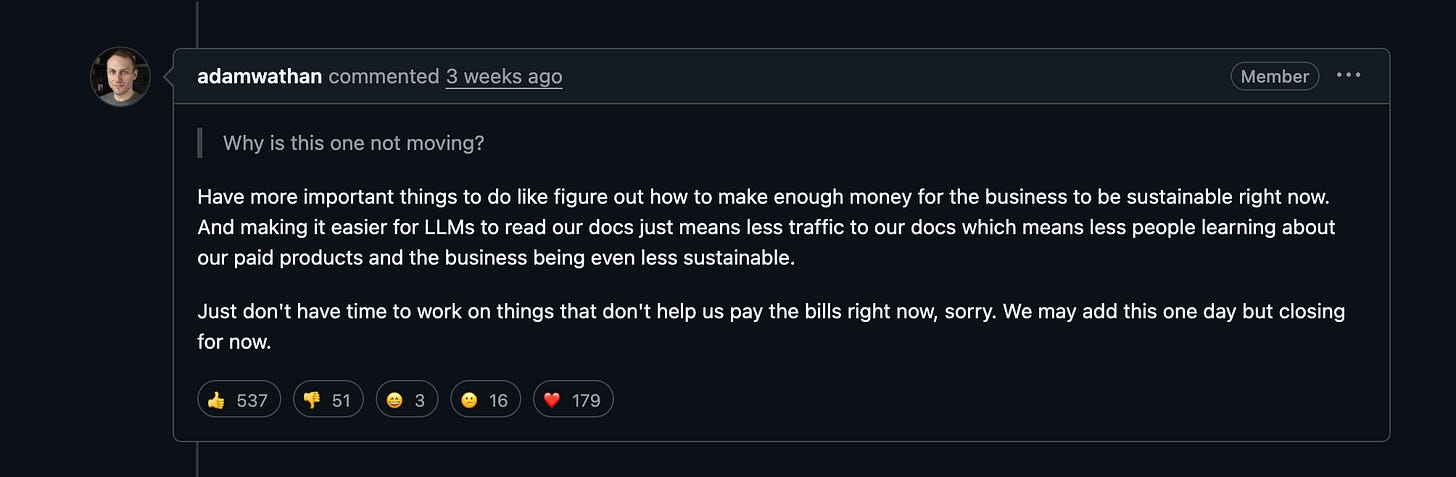
Adam Wathan explains how LLMs reading docs affected Tailwind’s paid product funnel.
The numbers are stark. Tailwind CSS: widely adopted, massive downloads, top in State of CSS. At the same time, several reports describe sharp revenue drops and falling documentation traffic. How does the most successful CSS framework of the decade nearly run out of money?
The founder explained it plainly when rejecting a community pull request about making docs more machine-readable: making docs easier for LLMs can reduce human traffic, and fewer humans seeing docs means fewer upgrades to paid products. Tailwind UI costs $299, and Tailwind Plus is subscription-based; both depend on people discovering the value in the docs. When tools such as Claude Code, Cursor, and GitHub Copilot generate Tailwind classes directly, that discovery funnel is severed.
The tech community responded fast. Vercel, Google AI Studio, and others pledged support; sponsors bought breathing room. That matters. Yet the structural economics remain unresolved. Every open-source project with commercial ambitions now faces the same trap: usage rising while revenue collapses because the public artifact becomes training material for tools that remove the need to visit the artifact.
This is personal to me. Tailwind taught me a different way to think about interfaces and pulled me out of Figma’s comfort zone. Its struggle is a design problem and a business problem at the same time. Design-wise, we must rethink documentation, learning flows, example architecture, and discovery UX, the fixes will be product and UX-level as much as they are pricing or sponsorship strategies.
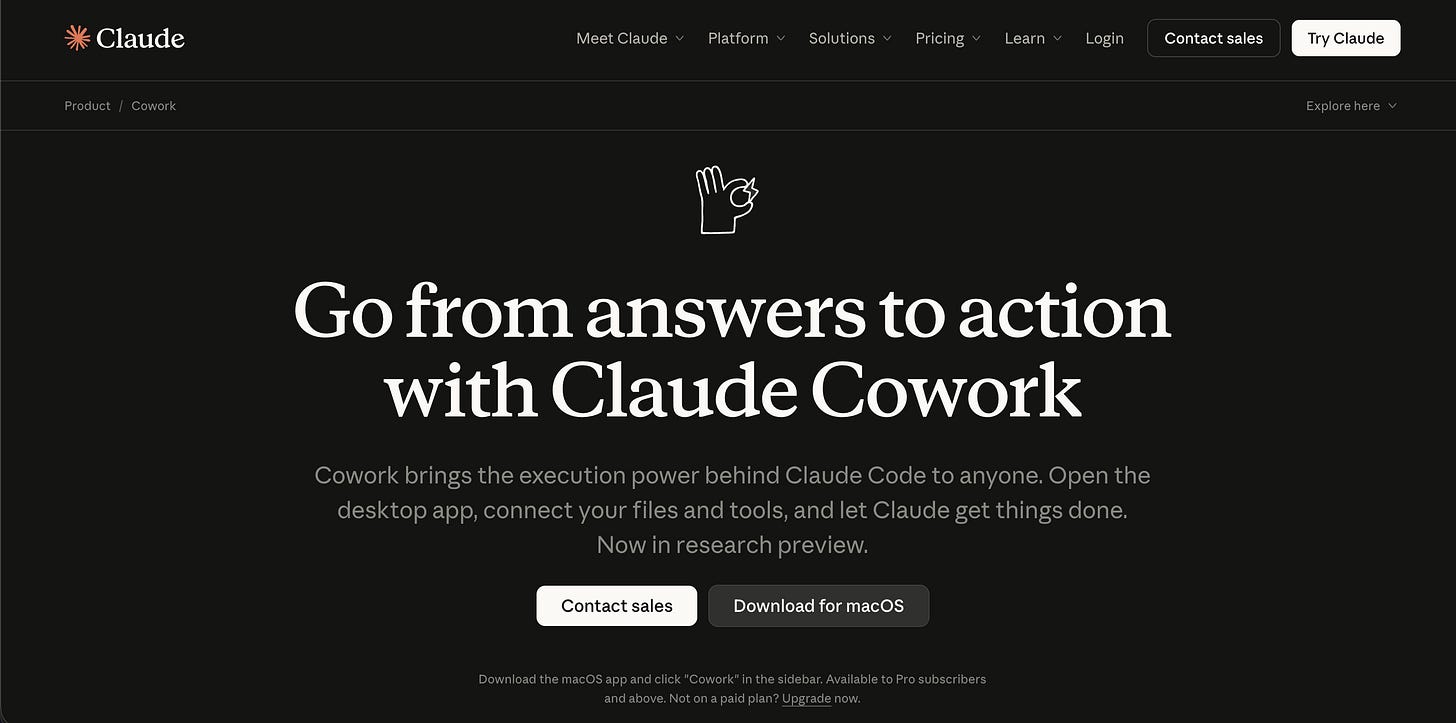
Claude Cowork extends Claude Code to a general-purpose agent executing multi-step tasks autonomously.
On January 12, Anthropic released Claude Cowork, a consumer-facing agent that reads folders, automates browser tasks, executes multi-step plans, and connects to Notion and Asana. Reporters note the rollout moved quickly from Max to Pro users, and much of Cowork appears to have been developed using Claude Code itself. In other words, the tool helped build the tool.
That detail matters. This is a shift from chat to execution. These systems act instead of just answering prompts. When an agent can read your repo, generate classes, open pull requests, or automate a testing flow, the productivity and value accrue to the runtime and connectors that execute the work. That changes who captures value: not only the documentation authors or library creators, but the platforms and agents that can access data and perform tasks for users.
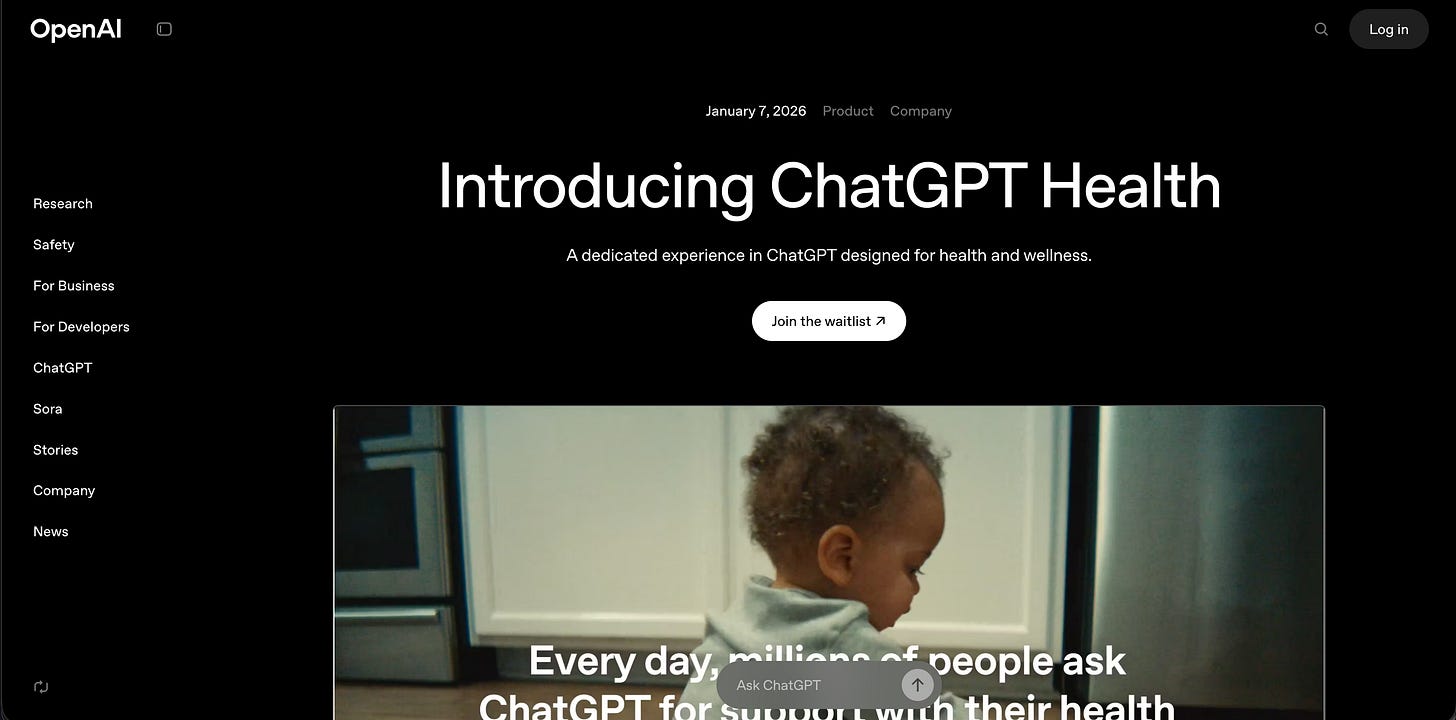
OpenAI launched ChatGPT Health to securely connect medical records and wellness apps inside ChatGPT.
On January 7, OpenAI launched ChatGPT Health, a dedicated health experience that connects medical records, Apple Health, and wellness apps with stronger privacy controls and product design intended for clinicians and patients. OpenAI says Health conversations will not be used to train their foundation models, and they’re rolling out access via a waitlist.
Why this matters for designers: privacy and UX are front and center. Health separates sensitive data, memories, and permissions — that’s good product thinking because consent, provenance, and undo flows are critical for trust. Designers who can prototype clear consent, provenance, and explainability will be in demand.
And on the value side: whoever safely normalizes and routes personal health signals at scale owns a sticky, private moat. Controlling those pipes and the UX that surrounds them is infrastructure ownership, even if the company claims that the data is not used for training.
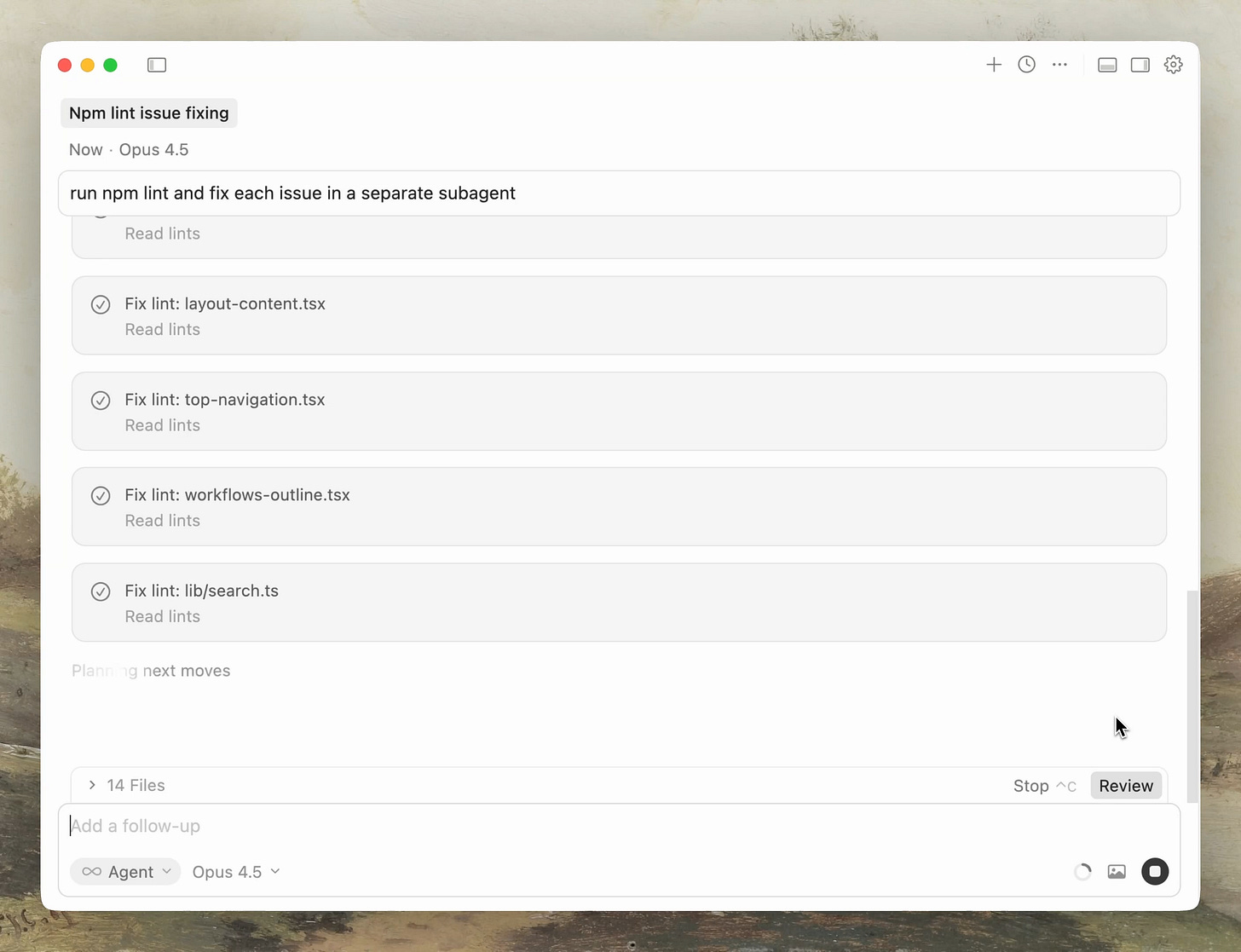
Cursor’s January update introduces Subagents, Skills, and Cursor Blame, enabling designers to track AI contributions and parallelize tasks safely.
Cursor’s January changelog shipped features designers should watch. Subagents let complex tasks be parallelized. Skills encode domain know-how into a project. Agents can generate mockups and assets that live inside a project. Most interesting is Cursor Blame, which attributes per-line AI changes and links them to the conversation that produced them.
Attribution and traceability are not nice-to-haves. They are prerequisites for trust. Cursor is shipping product primitives that resemble the Audit Interface Nielsen calls for.

Figma’s market price after its July 2025 IPO; chart from Yahoo Finance.
Remember the July IPO euphoria? Figma’s market price has corrected sharply since launch. That does not mean Figma is failing. Engagement metrics and multi-product adoption remain strong. The market reprice is a blunt reminder that valuation is not the same as validation.
What matters is where work happens. Figma owns the canvas where design is created and iterated. Owning the canvas is different from owning influence. Infrastructure and runtime are stickier than attention, and platforms that embed agent primitives will be better positioned to capture value.
Thanks for reading Eidos Design | UX AI Community! This post is public so feel free to share it.
Jakob Nielsen’s mid-January piece crystallizes the core brief for designers. He suggests AI task completion capability is roughly doubling every four months, and argues the next great UX problem is not the prompt box, but the Audit Interface, a concise, glanceable summary of an agent’s chain of actions plus a confidence check a human can use to accept, reject, or add friction. Designers already report that AI improves efficiency, while they still hesitate to trust outputs. That trust gap is the design problem of the decade. [
 Jakob Nielsen on UX18 Predictions for 2026Summary: Accelerating AI capabilities will shift focus from raw intelligence to autonomous agents and Generative UI, making UX the primary business moat. Multimodal integration and physical AI will revolutionize workflows, rendering static interfaces and single-purpose tools obsolete. However, progress faces hurdles like compute shortages and a widening class divide between premium and free-tier users…Read more7 months ago · 47 likes · 4 comments · Jakob Nielsen](https://jakobnielsenphd.substack.com/p/2026-predictions?utm_source=substack&utm_campaign=post_embed&utm_medium=web)
Make judgment visible. Publish short case notes showing where you accepted AI output and where you rejected it, and why. A public record of decisions signals taste and contextual judgment, and that kind of visible judgment is harder for models to replicate at scale.
👉 10 reasons designers do not pass interview processes — Tom Scott (Verified Insider). A tight checklist of common failings in modern design interviews: weak craft, poor product sense, incoherent storytelling, and the new reality — little AI prototyping experience. Useful as a checklist if you’re updating your portfolio or interview prep. [
 Verified Insider10 reasons designers do not pass interview processes I thought I would put together a list of reasons I’ve seen candidates not pass recent interviews at a range of companies. The way companies interview designers is changing, so it’s important to keep track of why people don’t make it through to learn and adapt…Read more7 months ago · 15 likes · 1 comment · Tom Scott](https://verifiedinsider.substack.com/p/10-reasons-designers-do-not-pass?utm_source=substack&utm_campaign=post_embed&utm_medium=web)
👉 The 2026 AI Design Field Report (tools, process, and what's working). A concise overview of current AI design tools, workflows, and what’s actually producing results for teams in 2026.
👉 People no longer act; they watch themselves being acted upon — Tobias van Schneider An essay on performance, proxemics, and how the possibility of being observed changes behavior. Relevant reading for anyone thinking about design that assumes an “audience” or that instruments user behavior.
👉 Designer Trained Her Own AI to Make Art. A case study of a designer creating custom AI art tools, showing how personalized AI workflows expand creative capabilities.
👉 ASCII characters are not pixels — Alex Harri. A brilliant technical-deep-dive turned cultural note about ASCII rendering and why treating characters as data (not mere pixels) changes tooling, UX assumptions, and creative possibilities. Nice perspective for designers who care about low-level representation.
👉** Interface Craft — a working library for designers who care.** A focused resource and component library that prioritizes craftsmanship and practical, thoughtful UI patterns — a good counterpoint to templated, AI-generated sameness. Bookmark for design patterns and careful primitives.
👉 Figma recommended practices in the age of AI — Arie M. Prasetyo Actionable tips for making Figma files AI-ready: file hygiene, naming conventions, component boundaries, and practices that make designs more interoperable and auditable by agents. Handy for teams moving to design-as-data.
👉 “You don’t have to live in SF” — Lee Robinson, Head of AI, interview This video is an interview/ talk where Lee Robinson discusses remote work, building in AI, and how creators can succeed from anywhere — a useful perspective right now as teams rethink what experience and location mean in a world of distributed AI workflows.
The Tailwind story is the collision of two value models, not just a company’s misfortune. Open source projects built audiences by being useful and monetized by teaching what they built. AI broke that connection: agents like Claude Code don’t need docs to generate correct classes. Knowledge is embedded, compressed, and distributed across billions of parameters.
Figma’s valuation, even after the correction, isn’t just about the editor. It’s about owning the place where design happens. The winners capture infrastructure, not only influence.
For designers, the question is urgent: are you building skills AI makes more valuable, or skills it makes redundant? Efficiency is rising, but trust lags: judgment, taste, and spotting errors are the real premiums. Nielsen’s Audit Interface is a blueprint for what we can start shipping today.
That someone is you.
If this edition sparked something for you, share it with someone who needs to read it. And subscribe if you haven’t already.
Here’s to a 2026 that is stranger, deeper, and more interesting than we expected.
Sincerely, Mykola Korzh