Pflegewächter, redesigned around the family’s open case
Pflegewächter helps people in Germany who need care, and their families, get the care level they are owed from their Pflegekasse, and challenge a wrong decision through partner lawyers. I worked there as a product designer from 2024 to 2025. In 2026 I signed up again as a new customer, recorded what the member area asks of a family, and redesigned it as a working concept.
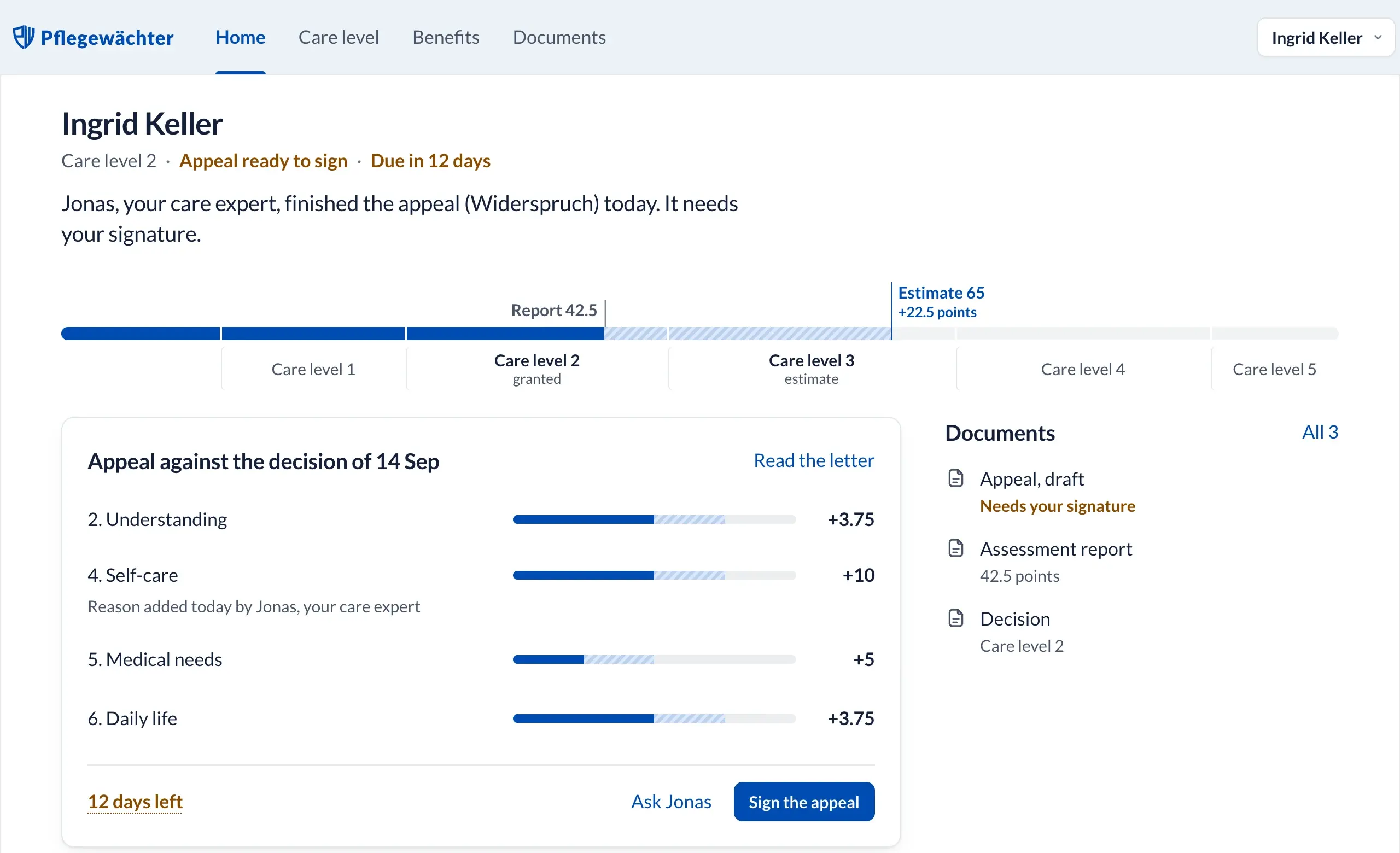
Pflegewächter home
01 The care-level rulerThe gap reads on the assessor’s own scale, so the family sees what the appeal is worth.
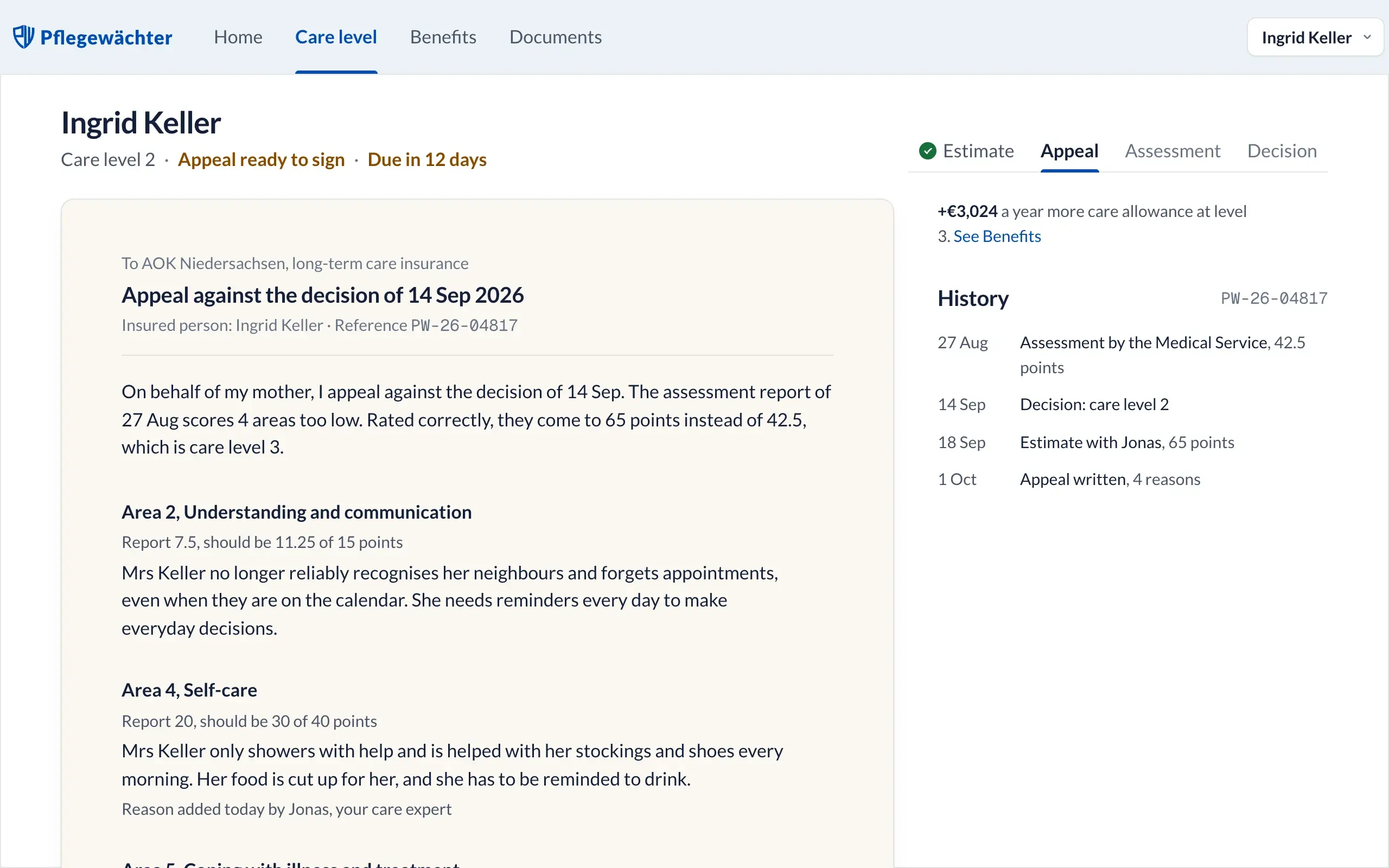
02 The appeal letterThe family signs a letter they can check, area by area.
03 The deadlineNothing else on the screen competes with the signature that keeps the appeal in time.
My work
Product Designer at Goodright, Pflegewächter’s company, from September 2024 to March 2025, on user research, landing pages, and accessible flows for older users. This redesign is my own concept, built in 2026 from a fresh account. Nothing from my time at Goodright is used.
A letter, and one month
A family member opens Pflegewächter holding the Bescheid, the letter from the Pflegekasse that granted a lower care level than they expected. From that letter they have one month to object. Pflegewächter’s lawyers file the objection. The family’s part takes about five minutes: share the letter’s details and sign. Every screen in the member area should serve those five minutes.
What the app asks first
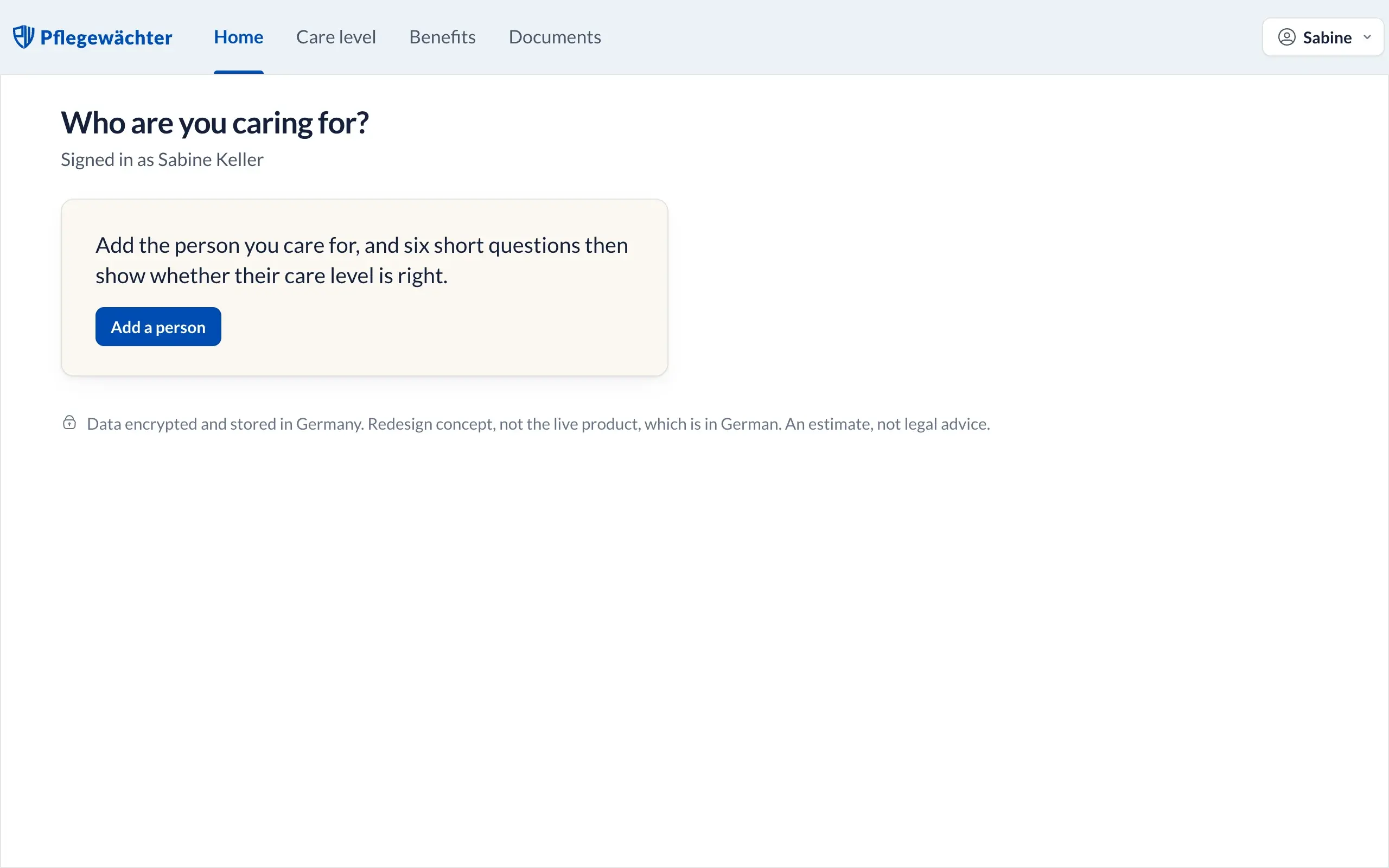
A new account opens on three equal cards: add a person, take the care-level test, check your benefits. Adding the person is the step everything else needs, and it is styled as the least important of the three. The care-level and benefits tabs open on the same test prompt, so one first job is spread across three tabs. The redesign’s first visit is one sentence and one action: add the person you care for.
The care-level tab shows “0 Bewilligter Pflegegrad” beside “? Möglicher Pflegegrad”. Before any assessment, a zero reads like a judgment. The redesign answers on the assessor’s own scale: a ruler of points, the report’s score against the estimate, and the care level each would mean.
The assessor’s scale
Points
42.5
Report 42.5
Care level
2
Report 2
Care allowance
€4,164
a year
Report €4,164
Report
Care level12345
5 points to care level 3.
42.5 points, care level 2, care allowance €4,164 a year. 5 points to care level 3.
1MobilityMobilityMild
02.557.510
2Understanding and communicationUnderstandingConsiderable
03.757.511.2515
3Behaviour and mental healthBehaviournot counted
03.757.511.2515
4Self-careSelf-careConsiderable
010203040
5Coping with illness and treatmentMedical needsMild
05101520
6Daily life and social contactDaily lifeConsiderable
03.757.511.2515
Areas 2 and 3 count as one: only the higher of the two is added to the total.
Change an area’s score
Invented case. An estimate, not legal advice. Thresholds as set in § 15 SGB XI.
The appeal, area by area
An objection is only as strong as its reasons. The redesign lists each area the assessment scored too low, the points it is short, and the reason the care expert added, so the family signs a letter they can check.
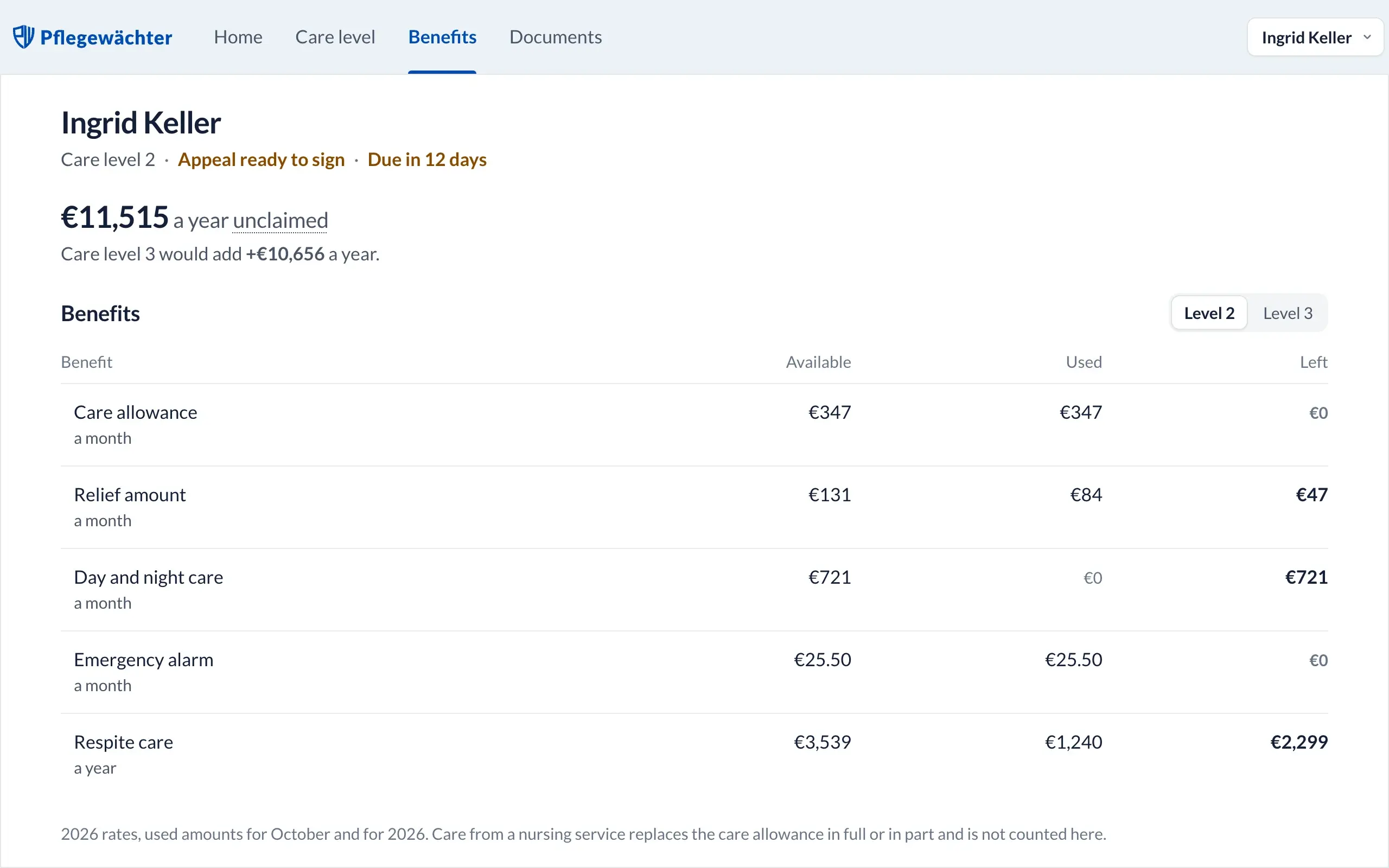
Benefit budgets appear blurred, although the amounts are set by law and public. The redesign leads with what goes unclaimed this year, then each benefit’s available, used, and left.
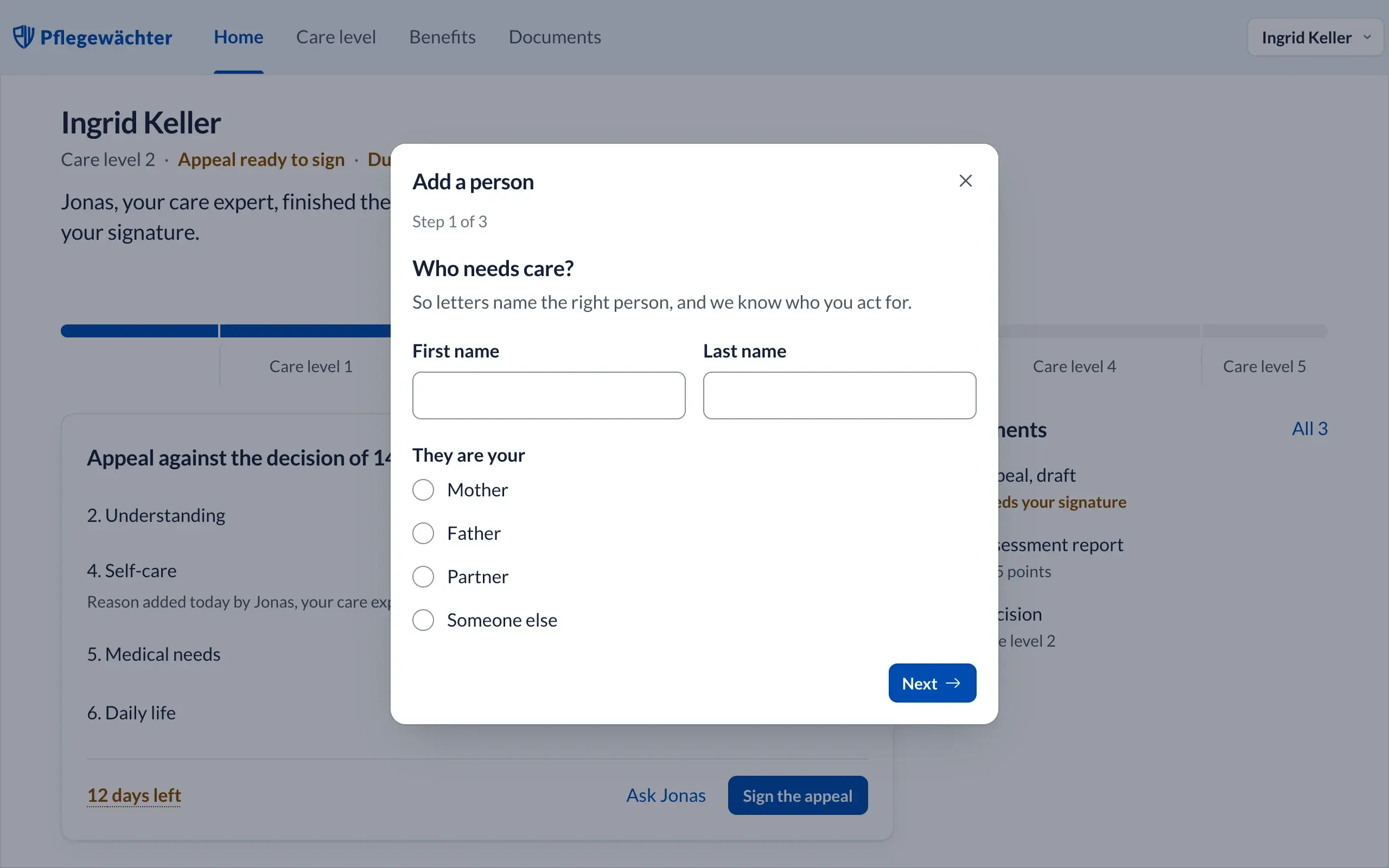
Adding a person asks for the insurance number first. The redesign asks who they are and how they are related, then care level and insurance, then a review.
A family comes to a care-level service with a deadline. Every screen should carry their case: where it stands, what is missing, and the one thing to do before the date.