Botics OS, redesigned: one RFQ from email to running machine
Botics designs and builds custom automation machines. I was its product designer from 2023 to 2024, on the MVP of its AI-assisted quoting platform. Two years on, I redesigned the platform as a working concept that follows one RFQ from the customer's email to a machine running on their floor.
The quote desk
The drawing, the bill of materials, and Botics' next step read as one quote.
My workSep 2023 – Jun 2024 at Botics2026 redesign concept
Product designer at Botics, and its only designer, working with the founder and a small engineering team. I helped define the MVP, wrote the user story map for engineering, and designed the core quoting product. The redesign is my own concept, built in 2026 as a working prototype. The before screens are Botics' current platform as published on botics.ai, made after I left.
Botics does the next step instead of waiting for a prompt
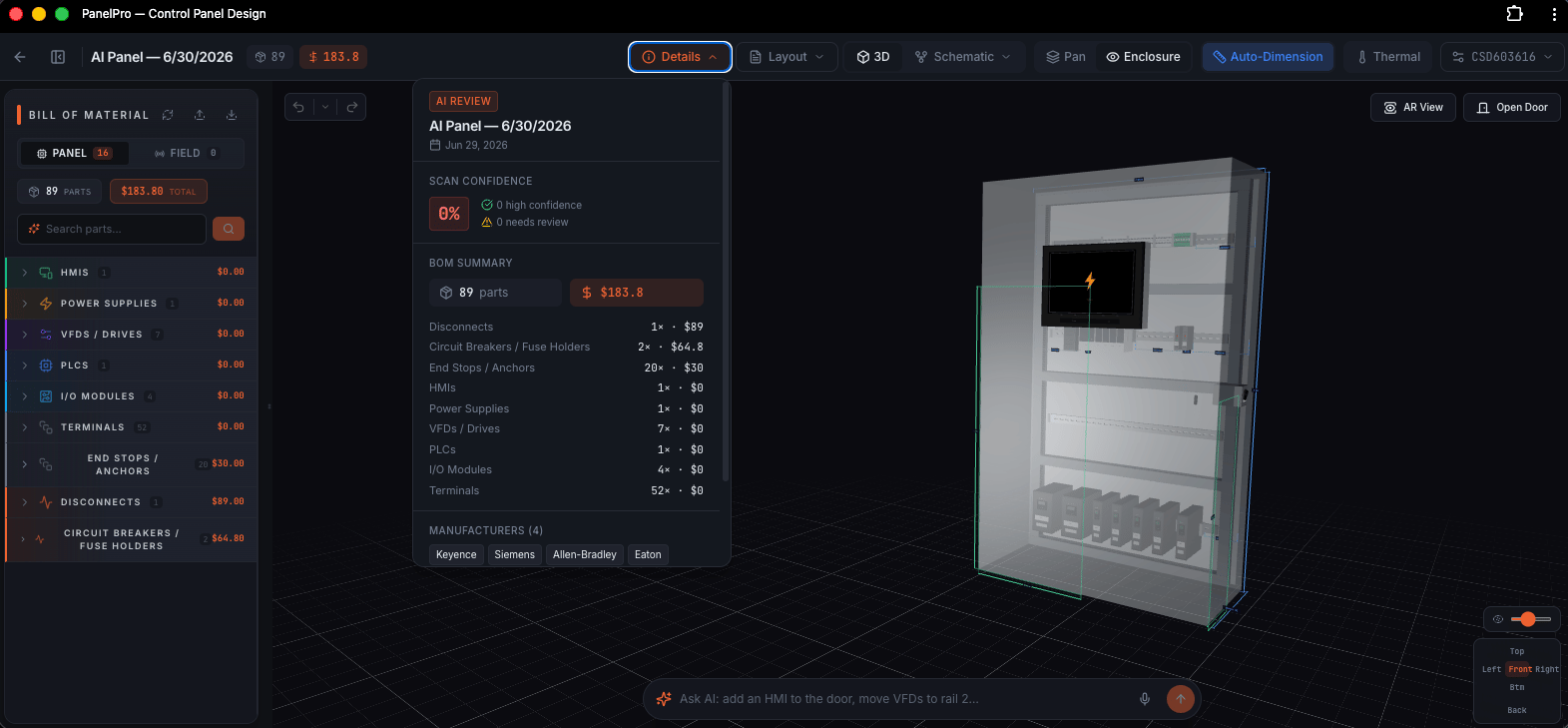
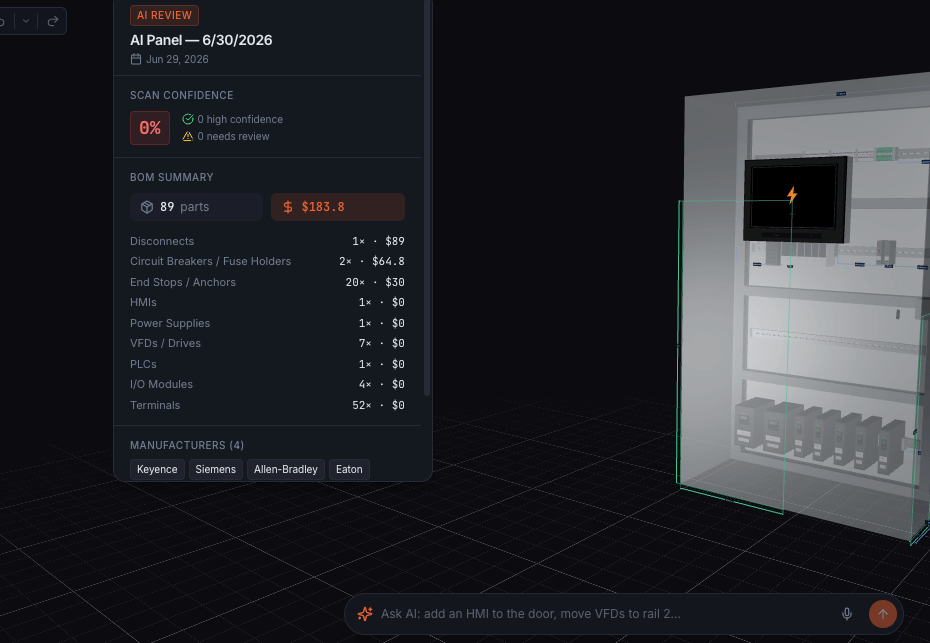
The live platform asks the engineer to lead: an Ask AI bar under the model, and an AI review card that reports a scan confidence. The tool helps once the engineer knows what to ask.
In the redesign Botics has already read the RFQ and prepared the next step. The bar says what it did, why in one clause, and offers the action that finishes it. Here it drafted the one question the RFQ leaves open, because the pallet design depends on the answer. Review opens the draft in place, and nothing reaches the customer until a person sends it.
The AI's surface
Botics drafts the question the RFQ leaves open and says why it matters.
A bill of materials that answers price and date
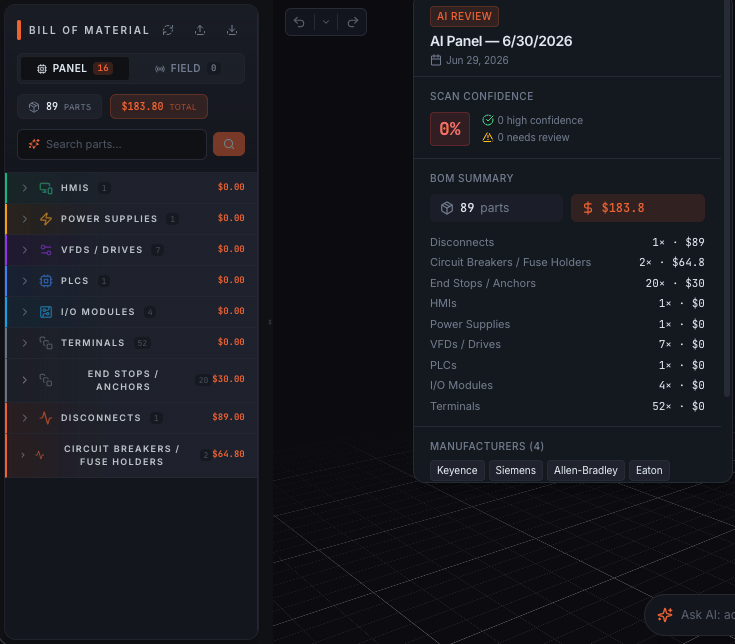
A buyer weighs two numbers: what the machine costs and when it runs. The live bill of materials groups parts by category, so a station's parts are spread across the list, and a category reads $0 until each of its parts is priced.
The redesign groups lines by station, the way the machine is built, and each station sits beside its drawing. Every station carries its price and its longest lead time, and the part that sets the date says so. Hardware and services total at the foot of the list, so the price stays in view while the list scrolls.
The bill of materials
Lines group by station, and the robot's 8 week lead is marked as the one that sets the date.
One RFQ, from email to running machine
Botics describes its own process as seven steps from requirement to running machine. The prototype follows one RFQ through them: the customer's email becomes requirements, a layout with two robot concepts, a quote, and a build plan with its payment milestones.
One story state feeds every view. When the customer replies that $205k is approved and asks about Concept B, the quote, the pipeline, the supplier dates, and Home all change with it, and Botics works out its next step again. The customer never sees the admin: the quote reaches them as a page with the open question as a control they can answer, so the answer comes back as data.
Review and send the question, then send the quote.
The phone is for the decision, not the build
A quote gets built at a desk, and the decision on it often happens between meetings. The phone edition keeps only what waits on a person: today's steps, the open RFQs, and the machines being built.
It installs to the home screen as a web app. The customer's reply arrives as a notification, and tapping it opens the decision it needs: Concept A against Concept B on price, date, and parts an hour, with the revision ready to send.
An AI tool for engineers earns trust by doing the next step and showing its reason, not by waiting to be asked. The design work is drawing the line between what it does alone and what waits for a person. Here the line is the building's door: Botics reads, matches, and updates on its own, and anything a customer or supplier would receive waits for someone to send it.